

Thursday, March 15, 2007

Tuesday, March 13, 2007

A friend from the United Nations Environment Programme (UNEP),sent me this and wants me to help circulate it.It is about Tunza Regional Children's Conference on the Environment to be held in Cameroon, from 23 to 26 July 2007.Please feel free to check out http://www.unep.org/Tunza/Children/events/Cameroon/Application_Form/ for details.
Wednesday, March 07, 2007
Yar'adua, is he Dead or Living?
Well, on Tuesday,March the 6th, the Internet media www.elendureports.com posted
"Yar'ardua Collapses...flown out"
This morning, BBC Network Africa confirmed he was in a far away German hospital for a medical check up.Only to read on Elendu Reports this afternoon about his death -"The presidential candidate of the Peoples Democratic Party (PDP), Gov. Musa Yar’ardua is dead. While details are scanty, multiple sources who spoke to Elendureports.com confirmed the passing of the prince who tried to continue in the political dynasty initiated by his older brother. . ."
However, I can not confirm the death from the BBC right now this is the latest I have from the BBC website "Nigeria's ruling party presidential contender, Umaru Yar'Adua, 55, says he is well enough to run in April's polls. Speaking to the BBC from Germany, where he was flown for a medical check-up, he scotched speculation that he was unfit to continue in the contest".
Elendu has this to say about the AIT contradicting version of the story"The African Independent Television (AIT) is reporting that the Peoples Democratic Party (PDP) presidential candidate, Gov. Musa Yar'adua is alive. We are still working on the story and will bring you details as we get them"
Which do we believe?
Well, on Tuesday,March the 6th, the Internet media www.elendureports.com posted
"Yar'ardua Collapses...flown out"
This morning, BBC Network Africa confirmed he was in a far away German hospital for a medical check up.Only to read on Elendu Reports this afternoon about his death -"The presidential candidate of the Peoples Democratic Party (PDP), Gov. Musa Yar’ardua is dead. While details are scanty, multiple sources who spoke to Elendureports.com confirmed the passing of the prince who tried to continue in the political dynasty initiated by his older brother. . ."
However, I can not confirm the death from the BBC right now this is the latest I have from the BBC website "Nigeria's ruling party presidential contender, Umaru Yar'Adua, 55, says he is well enough to run in April's polls. Speaking to the BBC from Germany, where he was flown for a medical check-up, he scotched speculation that he was unfit to continue in the contest".
Elendu has this to say about the AIT contradicting version of the story"The African Independent Television (AIT) is reporting that the Peoples Democratic Party (PDP) presidential candidate, Gov. Musa Yar'adua is alive. We are still working on the story and will bring you details as we get them"
Which do we believe?
Tuesday, March 06, 2007


Ghana AT 50
Exactly fifty years ago the 'wind of change', as they call it, started blowing from an area some where on the western coast of Africa , and a man called Kwame Nkrumah led his nation to independence .

The leadership of Nkrumah was 'short-lived' as he was over-thrown by a military coup in 1966 while away on a peace visit overseas.
Well, it was alleged he was corrupt and despotic haven changed Ghana to a one party state.
The coup ushered Ghana into a phase of military rule.Subsequent military governments accused her predecessors of corruption and economic mismanagement.
The prevailing climate of political instability prepared the stage for the military junta, Jerry Rawlings who later transformed himself to a democratically elected ruler and eventually exited the presidency in 2001.
Ghana has a population of 21.8 million (UN, 2005)

The multi ethnic Ghanaian state occupies 238,533 sq km (92,098 sq miles) and has 56 years (men), 57 years (women) life expectancy (UN).
Ghana is one of the very few African countries exempted from Civil wars, that does not mean she did not have her a fair share of violent socio political unrest anyway.Ghana is a model of economic and 'Renaissance' political stability for the sub region with a GNI per capita: US $450 (World Bank, 2006) .
This birthday bash is estimated to have cost Ghana $20m (£10.4m; 15.2m euros).
Critics of this bash have questioned the moral wisdom behind a birthday celebration this expensive considering the high poverty and unemployment rate in the country.

But a school of thought has provided a defence, saying the celebration and expenses were worthwhile because they encourage a"Sense of unity" among the good people of Ghana and create an opportunity for the Ghanaian state to "Take stock" of here existence and make necessary improvements for the future.

Well,
Happy Celebration!
Long live Ghana!!
Long Live Africa!!!
Thursday, March 01, 2007


Baba Mugabe at 83
Do you Know that ?
President Robert Mugabe has ruled Zimbabwe since the country gained independence from Britain in 1980.
He had a big birthday bash last weekend.
The celebrations were held in the central town of Gweru and cost thousands of dollars.
There was a campaign to raise funds for the birthday celebrations by a youth organisation called the 21 February Movement, which was founded in 1986 in honour of Papa Mugabe.
"We are looking to raise 300m Zimbabwe dollars ($1.2m at the official exchange rate; $65,200 at the unofficial rate) that will be used at the birthday celebrations in Gweru," Emmanuel Fundira, chairman of the movement, told the AFP news agency.
Zimbabweans were asked to contribute funds towards a big birthday party for President Robert Mugabe,
According to the government, one US dollar is worth $Z250, but on the street, the US dollar can be sold for Z$4,600.
Education and health care have also become scarce commodities with many unable to send their children to school or get proper medical treatment.
Zimbabweans often enjoy frequent strike of the health and other government workers overs unpaid and low wages
Cycling and walking long distance to work daily is a common fun in that country
Amid all these the darling coordinator of the birthday bash sees nothing wrong in it, because it brings young people close to their leader ,he thinks.
Comrade Fidel Castro was Baba's comrade at arm in those guerrilla days of the 1970s.
Papa continues to blame the opposition and foreign governments for the enjoyment in his country and not his excellent economic policies and his well deserved extravaganzas .
Thursday, February 22, 2007
A reflection on the last post.
Did i say i summary of the interview?
Oh! certainly not exactly that but some important things about his personality.
I think even his critics would agree that we have got a great deal of things to learn from him on the road to development.
I mean at the level of individual behaviour
Well, some would argue that sustainable global development would not be achieved via the Rockefeller style of philanthropic donations to the poor .
Nonetheless, let us not rule out the possibility that a good junk of the donation might be used by the Charity to create enabling institutions and infrastructures for the betterment of the poor.Even as some would argue that we can not separate hand-outs to the poor from their emancipation.
Well, the following could be practically learnt from his life:
>1) Never procrastinate, take action,be enterprising!
>2) No investment is too small.
>3) Be green! Do not waste the world's precious natural resources on things you can really do without.
Just as he can do without chartered flights, you can do without unnecessary indulgence that destroy our bio diversity, emit green house gasses...
Let use preserve our bio diversity!!!.
Did i say i summary of the interview?
Oh! certainly not exactly that but some important things about his personality.
I think even his critics would agree that we have got a great deal of things to learn from him on the road to development.
I mean at the level of individual behaviour
Well, some would argue that sustainable global development would not be achieved via the Rockefeller style of philanthropic donations to the poor .
Nonetheless, let us not rule out the possibility that a good junk of the donation might be used by the Charity to create enabling institutions and infrastructures for the betterment of the poor.Even as some would argue that we can not separate hand-outs to the poor from their emancipation.
Well, the following could be practically learnt from his life:
>1) Never procrastinate, take action,be enterprising!
>2) No investment is too small.
>3) Be green! Do not waste the world's precious natural resources on things you can really do without.
Just as he can do without chartered flights, you can do without unnecessary indulgence that destroy our bio diversity, emit green house gasses...
Let use preserve our bio diversity!!!.
Tuesday, February 20, 2007
It was not on my 'TO DO LIST' to blog today and even if I would,perhaps later in the day, certainly not on this topic.But i just got this,a summary of an interview Warren Buffet gave to CNBC from a friend and a colleague of mine on the Venture in Management Programme at the Lagos Business School in Nigeria sometimes 2005.Her name is Tobi.
Please have it...hope you enjoy it!
There was a one hour interview on CNBC with Warren Buffet, the second
richest man in the US who has donated $31 billion to charity. Here are some very
interesting aspects of his life:
>1) He bought his first share at age 11 and he now regrets that he started too late!
>2) He bought a small farm at age 14 with savings from delivering newspapers.
>3) He still lives in the same small 3 bedroom house in mid-town Omahathat
he bought after he got married 50 years ago. He says that he has everything
he needs in that house. His house does not have a wall or a fence.
>4) He drives his own car everywhere and does not have a driver or security people around him.
>5) He never travels by private jet, although he owns the world's largest
private jet company.
>6) His company, Berkshire Hathaway, owns 63 companies. He writes only one
letter each year to the CEOs of these companies, giving them goals for the
year. He never holds meetings or calls them on a regular basis.
>7) He has given his CEO's only two rules.
Rule number 1: Do not lose any of your share holder's money.
Rule number 2: Do not forget rule number 1
>8) He does not socialize with the high society crowd. His past time after
he gets home is to make himself some pop corn and watch television.
>9) Bill Gates, the world's richest man met him for the first time only 5
years ago. Bill Gates did not think he had anything in common with Warren
Buffet. So he had scheduled his meeting only for half hour. But when Gates
met him, the meeting lasted for ten hours and Bill Gates became a devotee
of Warren Buffet.
>10) Warren Buffet does not carry a cell phone, nor has a computer on his desk.
>11) His advice to young people: Stay away from credit cards and invest in yourself.
Please have it...hope you enjoy it!
There was a one hour interview on CNBC with Warren Buffet, the second
richest man in the US who has donated $31 billion to charity. Here are some very
interesting aspects of his life:
>1) He bought his first share at age 11 and he now regrets that he started too late!
>2) He bought a small farm at age 14 with savings from delivering newspapers.
>3) He still lives in the same small 3 bedroom house in mid-town Omahathat
he bought after he got married 50 years ago. He says that he has everything
he needs in that house. His house does not have a wall or a fence.
>4) He drives his own car everywhere and does not have a driver or security people around him.
>5) He never travels by private jet, although he owns the world's largest
private jet company.
>6) His company, Berkshire Hathaway, owns 63 companies. He writes only one
letter each year to the CEOs of these companies, giving them goals for the
year. He never holds meetings or calls them on a regular basis.
>7) He has given his CEO's only two rules.
Rule number 1: Do not lose any of your share holder's money.
Rule number 2: Do not forget rule number 1
>8) He does not socialize with the high society crowd. His past time after
he gets home is to make himself some pop corn and watch television.
>9) Bill Gates, the world's richest man met him for the first time only 5
years ago. Bill Gates did not think he had anything in common with Warren
Buffet. So he had scheduled his meeting only for half hour. But when Gates
met him, the meeting lasted for ten hours and Bill Gates became a devotee
of Warren Buffet.
>10) Warren Buffet does not carry a cell phone, nor has a computer on his desk.
>11) His advice to young people: Stay away from credit cards and invest in yourself.
Friday, February 16, 2007
I wonder if today is that tomorrow i promised in the last post.
Well, please bear with me.Just that i have been working on a start-up that has taken all my time for a while.You know how demanding consulting could be at times.
Yes,I was trying to give a gist of how the Global System for Mobile Communication-GSM is revolutionising the social, cultural and economic way of life of a community somewhere in Nigeria.
Just about 12 months to my last visit the only way to make telephone calls out of that community was through a Thurayah satelite phone -the cost was and infact, is still 'back breaking '- or travel some kilometres away.
I got to know that about 4 months to my visit the closest substitute was to use a TV antenna to receive a fluctuating GSM signal .Of course that meant that the phone could not be used beyond the lenght of the cable tied around a cell phone's Aeriel.
It was only an SMS away to call the young boy who washed and pressed my dresses.The phone was apparently no luxury to that boy since he had access to his Dad's. I can roughly estimate their family income , maybe about the equivalent of $150 a month.
An interesting occasion was when a mother simply sent an SMS to call her son back home from the football field where he had gone to play.
From the economic angle,jobs where created for a good number of youths who would have ordinarily constituted local nuisance or have travelled to an urban centre probably to do nothing but join the pool of a growing unemployed population, at least they are able to operate call centres.
The most significant about this development was for my cousin who got an SMS from a leading blue chip to be present for an interview. He would have missed that chance of a job he later got,thanks to the GSM.
Though relatively expensive, but put 'side by side' with the benefits it delivers, I think the GSM technology would not be a bad idea to be employed in facilitating some community based grass-root development initiatives.Per harps for education use, or something.
Well, please bear with me.Just that i have been working on a start-up that has taken all my time for a while.You know how demanding consulting could be at times.
Yes,I was trying to give a gist of how the Global System for Mobile Communication-GSM is revolutionising the social, cultural and economic way of life of a community somewhere in Nigeria.
Just about 12 months to my last visit the only way to make telephone calls out of that community was through a Thurayah satelite phone -the cost was and infact, is still 'back breaking '- or travel some kilometres away.
I got to know that about 4 months to my visit the closest substitute was to use a TV antenna to receive a fluctuating GSM signal .Of course that meant that the phone could not be used beyond the lenght of the cable tied around a cell phone's Aeriel.
It was only an SMS away to call the young boy who washed and pressed my dresses.The phone was apparently no luxury to that boy since he had access to his Dad's. I can roughly estimate their family income , maybe about the equivalent of $150 a month.
An interesting occasion was when a mother simply sent an SMS to call her son back home from the football field where he had gone to play.
From the economic angle,jobs where created for a good number of youths who would have ordinarily constituted local nuisance or have travelled to an urban centre probably to do nothing but join the pool of a growing unemployed population, at least they are able to operate call centres.
The most significant about this development was for my cousin who got an SMS from a leading blue chip to be present for an interview. He would have missed that chance of a job he later got,thanks to the GSM.
Though relatively expensive, but put 'side by side' with the benefits it delivers, I think the GSM technology would not be a bad idea to be employed in facilitating some community based grass-root development initiatives.Per harps for education use, or something.
Wednesday, January 31, 2007
Do I say Happy new year on the last day of January?
Well, I may be allowed when I say that to my Muslim brothers and Sisters who just celebrated the Islamic new year a few days back. I will also be correct saying that to my People in China who are about celebrating their new year in a few days time.
About 6 weeks ago I was privileged not only to have a holiday but to spend it in a country some where in Kogi State, Nigeria.
I saw a number of changes that have taken place in that town within a period of 12 months.
Non is as interesting as the existence of GSM Telecoms network.
I will continue from here tomorrow, Please
Well, I may be allowed when I say that to my Muslim brothers and Sisters who just celebrated the Islamic new year a few days back. I will also be correct saying that to my People in China who are about celebrating their new year in a few days time.
About 6 weeks ago I was privileged not only to have a holiday but to spend it in a country some where in Kogi State, Nigeria.
I saw a number of changes that have taken place in that town within a period of 12 months.
Non is as interesting as the existence of GSM Telecoms network.
I will continue from here tomorrow, Please
Friday, December 22, 2006
Shit Business is a serious Business!
Earlier in the week I made a call at an interesting place-the Lagos- Ibadan Expressway office of DMT Mobile Toilets Limited -on behave of a not for profit organisation that I happen to be on her board. The mission was to make an enquiry about the prospect of working with them to execute one of our programmes scheduled to kick-off in two Nigerian states next year (God willing).
It was not until then I better appreciated the business and social entrepreneurial acumen of Nigeria’s beloveth Isaac Durojaiye a.k.a OTUNBA GADAFFI, the man who has made a difference in the improvement of public health and social transformation by providing job opportunities and better sanitation through his mobile toilets enterprise.
Sometimes, some things we neglect, perhaps despise could be potentially rewarding ventures. That reminds me; a few hours ago I listened to one of my favourite tapes, a lecture delivered by a respected People and Organisations development guru. He jokingly said, sometimes the right things are directly the opposite of what the crowds do.
I think I can better infer some sense from that statement looking at the success story of DMT Mobile Toilets, where Shit business is truly a serious business.
The Fast moving multi-million Naira ‘agbe po’, shit carrier Venture of OTUNBA GADAFFI is not only creating a ‘modest’ source of sustenance for the Otunba alone, but scores of his direct and indirect employees, including an eloquent customer service representative who professionally attended to my inquiry as I overheard the Otunba talk with his banker who brought a charismas card for him. Not surprising, the Otunba exchange the gesture by giving the banker two DMT charismas cards, one personal and the other for the staff of his branch.
Shit as you drive! Even on the Third Mainland.
High-level hygiene and sanitation!
DMT has a not for profit arm that is committed to giving free toilets to schools and unemployed women in order to promote better hygiene, health and empowering women in the society.
Otunba Gadaffi has won a good number of laurels from reputable organisations at home and abroad to commend what a lot of people see as his extra-ordinary entrepreneurial acumen and contributions to the society
Earlier in the week I made a call at an interesting place-the Lagos- Ibadan Expressway office of DMT Mobile Toilets Limited -on behave of a not for profit organisation that I happen to be on her board. The mission was to make an enquiry about the prospect of working with them to execute one of our programmes scheduled to kick-off in two Nigerian states next year (God willing).
It was not until then I better appreciated the business and social entrepreneurial acumen of Nigeria’s beloveth Isaac Durojaiye a.k.a OTUNBA GADAFFI, the man who has made a difference in the improvement of public health and social transformation by providing job opportunities and better sanitation through his mobile toilets enterprise.
Sometimes, some things we neglect, perhaps despise could be potentially rewarding ventures. That reminds me; a few hours ago I listened to one of my favourite tapes, a lecture delivered by a respected People and Organisations development guru. He jokingly said, sometimes the right things are directly the opposite of what the crowds do.
I think I can better infer some sense from that statement looking at the success story of DMT Mobile Toilets, where Shit business is truly a serious business.
The Fast moving multi-million Naira ‘agbe po’, shit carrier Venture of OTUNBA GADAFFI is not only creating a ‘modest’ source of sustenance for the Otunba alone, but scores of his direct and indirect employees, including an eloquent customer service representative who professionally attended to my inquiry as I overheard the Otunba talk with his banker who brought a charismas card for him. Not surprising, the Otunba exchange the gesture by giving the banker two DMT charismas cards, one personal and the other for the staff of his branch.
Shit as you drive! Even on the Third Mainland.
High-level hygiene and sanitation!
DMT has a not for profit arm that is committed to giving free toilets to schools and unemployed women in order to promote better hygiene, health and empowering women in the society.
Otunba Gadaffi has won a good number of laurels from reputable organisations at home and abroad to commend what a lot of people see as his extra-ordinary entrepreneurial acumen and contributions to the society
Thursday, December 14, 2006

Photo Copyright:http://www.fodors.com/wire/archives/002222.cfm
I finally got started.
Sometimes ago my Chairman adviced that more than ever before there was need to have a vivid picture of ones dream .An opinion I think I strongly agree with.
Today i got it!
Atleast I am able to have the first picture of so many pictures.
The picture is of my ranch taken 12 midnight, 31st Dec. 2015.
The location is Kogi State, Central Nigeria.
By that day the facility would generate at least 1,000,000 known direct jobs worldwide.
Powered via renewables.
Wednesday, December 06, 2006
The richest 2% of adults in the world own more than half of all household wealth, according to a new study by a United Nations research institute.
The report, from the World Institute for Development Economics Research at the UN University, says that the poorer half of the world's population own barely 1% of global wealth.
The report, from the World Institute for Development Economics Research at the UN University, says that the poorer half of the world's population own barely 1% of global wealth.
There have of course been many studies of worldwide inequality.
But what is new about this report, the authors say, is its coverage.
It deals with all countries in the world - either actual data or estimates based on statistical analysis - and it deals with wealth, where most previous research has looked at income.
What they mean by wealth in this study is what people own, less what they owe - their debts. The assets include land, buildings, animals and financial assets.
Different assets
The analysis shows, as have many other less comprehensive studies, striking divergences in wealth between countries.
Wealth is heavily concentrated in North America, Europe and some countries in the Asia Pacific region, such as Japan and Australia.
 In richer nations, landowners can afford not to farm their properties
These countries account for 90% of household wealth.
The study also finds that inequality is sharper in wealth than in annual income.
And it uncovers some striking differences in the types of assets that dominate in different countries.
In less developed nations, land and farm assets are more important, reflecting the greater importance of agriculture in those economies.
In addition, the report says the weighting is the result of "immature" financial institutions, which make it much harder for people to have savings accounts or shares.
In contrast, some citizens of the rich countries have more debt than assets - making them, the report says, among the poorest in the world in terms of household wealth.
However, they are presumably better off in terms of what they consume than many people in developing countries.
Comprehensive
The survey is based on data for the year 2000. The authors say a more recent year would have involved more gaps in the data. As it is, many figures - especially for developing countries - have had to be estimated.
 Many the world's poorer children will have very little to look forward to
Nonetheless, the authors say it is the most comprehensive study of personal wealth ever undertaken.
Why does it matter? Because wealth serves as insurance against times when income tends to fall, such as unemployment, sickness or old age.
It is also a source of finance for small businesses, a particularly important point since it is the countries with lower levels of personal wealth which also tend to have weaker financial systems without the funds, ability or inclination to lend to small firms.
The report is not about policy recommendations.
But one of the authors, Professor Anthony Shorrocks, says it does draw attention to the importance of enhancing banking systems in developing countries to help generate the funds for business investment.
Courtesy ; Andrew WalkerMonday, November 20, 2006
Some pictures from the 180 degrees seminar at

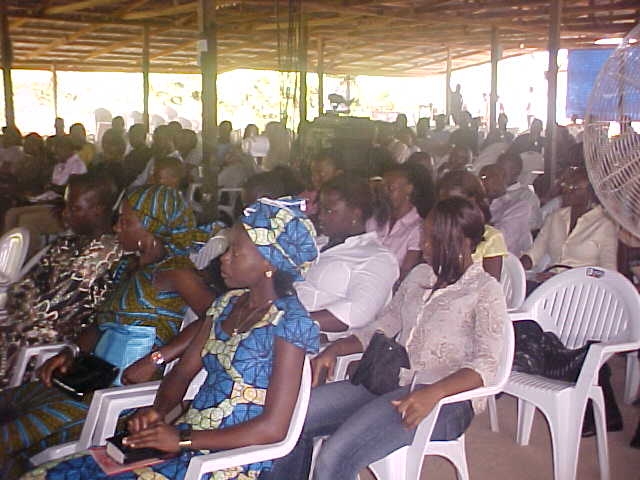
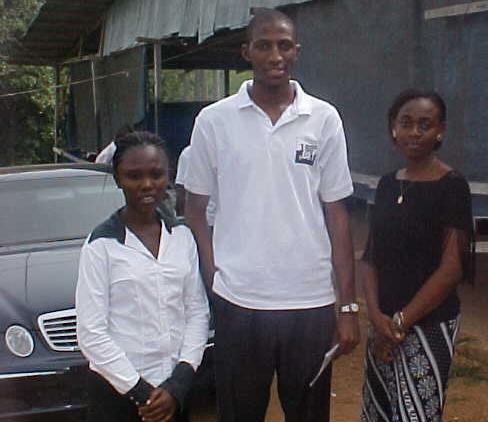
(Below) :Ibikunle(M),Tolu(L) and her
Friend,Bimbo.Two final year students
with a smart blue print of how they want
to be creators of jobs after school.
Above:A cross section of Paticipa
 nts at the seminar.
Below:Second from Left, Ambassador Sesan, Prof. Utomi and Mr. Akinyemi

Friday, November 17, 2006
Last Saturday 11th November, 180 degrees (www.my180degrees.com), an organization created to help people achieve self development and empowerment had a seminar at
The seminar addressed a number of issues, Key among them was entrepreneurship.
As you would expect, during the interactive session a student raised a ‘point ‘about having enterprising ideas but not been able to actualize it because of funds constrains.
The professor advised a proper feasibility study to be made in order to be sure such ventures are truly enterprising. He said a lot of individuals and organizations are readily available to fund profitable ventures, if only a ‘strong’ feasibility study would suggest that such ventures are truly profitable.
If this thinking is a way forward, to fund profitable ventures, then it will be a smart idea for southern –developing –nations to invest in institutions and ideas that will enhance credible feasibility reports. Just like the American style.
Friday, November 10, 2006
Thank God its Friday Quotes
Think and make a reflection!
“Our deepest fear is not that we are inadequate. Our deepest fear is that we are powerful beyond measure. It is our light, not our darkness that most frightens us. We ask ourselves, Who am I to be brilliant, gorgeous, talented, fabulous? Actually, who are you not to be? You are a child of God. Your playing small does not serve the world. There is nothing enlightened about shrinking so that other people won't feel insecure around you. We are all meant to shine, as children do. We were born to make manifest the glory of God that is within us. It's not just in some of us; it's in everyone. And as we let our own light shine, we unconsciously give other people permission to do the same. As we are liberated from our own fear, our presence automatically liberates others.”
Nelson Rolihlahla Mandela - Inauguration Speech May 10, 1994
Former president Rep. of South Africa
"We will have time to reach the Millennium Development Goals – worldwide and in most, or even all, individual countries – but only if we break with business as usual.
We cannot win overnight. Success will require sustained action across the entire decade between now and the deadline. It takes time to train the teachers, nurses and engineers; to build the roads, schools and hospitals; to grow the small and large businesses able to create the jobs and income needed. So we must start now. And we must more than double global development assistance over the next few years. Nothing less will help to achieve
the Goals."
United Nations Secretary-General
Kofi A. Annan
Think and make a reflection!
“Our deepest fear is not that we are inadequate. Our deepest fear is that we are powerful beyond measure. It is our light, not our darkness that most frightens us. We ask ourselves, Who am I to be brilliant, gorgeous, talented, fabulous? Actually, who are you not to be? You are a child of God. Your playing small does not serve the world. There is nothing enlightened about shrinking so that other people won't feel insecure around you. We are all meant to shine, as children do. We were born to make manifest the glory of God that is within us. It's not just in some of us; it's in everyone. And as we let our own light shine, we unconsciously give other people permission to do the same. As we are liberated from our own fear, our presence automatically liberates others.”
Nelson Rolihlahla Mandela - Inauguration Speech May 10, 1994
Former president Rep. of South Africa
"We will have time to reach the Millennium Development Goals – worldwide and in most, or even all, individual countries – but only if we break with business as usual.
We cannot win overnight. Success will require sustained action across the entire decade between now and the deadline. It takes time to train the teachers, nurses and engineers; to build the roads, schools and hospitals; to grow the small and large businesses able to create the jobs and income needed. So we must start now. And we must more than double global development assistance over the next few years. Nothing less will help to achieve
the Goals."
United Nations Secretary-General
Kofi A. Annan
Tuesday, November 07, 2006
PRIVATE SECTOR DEVELOPMENT
Private Sector Development (PSD) is a strategy for promoting economic growth and reducing poverty in developing countries by incorporating private industry and competitive markets into a country's overall development framework.
Supporters argue that PSD is an important part of poverty reduction. It is said that the private sector can go along way in developing countries toward the provision of basic services, empowering the poor by improving quality and access to health services, education and infrastructure. Strategies and best practices for ensuring that private sector development is pro-poor is a popular topic for policy makers.
However,this school of thought rightly holds that we should concern ourselves with issues of wealth creation rather than send our time to discuss poverty and it root causes.
The justification for this thinking is that for too long scholarly efforts and thinking have been directed to studying poverty without any meaningful results. Hence, there has dot to be a rethink.
Private Sector Development (PSD) is a strategy for promoting economic growth and reducing poverty in developing countries by incorporating private industry and competitive markets into a country's overall development framework.
Supporters argue that PSD is an important part of poverty reduction. It is said that the private sector can go along way in developing countries toward the provision of basic services, empowering the poor by improving quality and access to health services, education and infrastructure. Strategies and best practices for ensuring that private sector development is pro-poor is a popular topic for policy makers.
However,this school of thought rightly holds that we should concern ourselves with issues of wealth creation rather than send our time to discuss poverty and it root causes.
The justification for this thinking is that for too long scholarly efforts and thinking have been directed to studying poverty without any meaningful results. Hence, there has dot to be a rethink.
Friday, October 20, 2006
My first assignment at work today was to have a chat with a high-level official of a government agency about one of the Public-Private Partnership packages we are working on. I came back to office to meet an office birthday ‘grove’ in honor of a colleague, Yemisi. I wish her many happy returns.
MY THOUGHT TODAY
I think we’d work better on the MDGs if the awareness about the goals is intensified and a new paradigm introduced.
What paradigm? What about if the private sector is seen more as partner, I mean committed partners on the road to the achievement of the MDGs? Maybe corporations, whatever their sizes, around the world commit a proportion of their yearly profit before tax to the MDGS.
MY THOUGHT TODAY
I think we’d work better on the MDGs if the awareness about the goals is intensified and a new paradigm introduced.
What paradigm? What about if the private sector is seen more as partner, I mean committed partners on the road to the achievement of the MDGs? Maybe corporations, whatever their sizes, around the world commit a proportion of their yearly profit before tax to the MDGS.
Monday, October 16, 2006
I think I flawed one of the cardinal ideas behind the making of this blog-to create a forum where we can all rub minds on the challenges of development in an atmosphere devoid of professional/technical jargons. The concept of “Northern and Southern states” is the centrepiece of a classification of the international political economy referring to the northern and southern hemisphere countries accordingly; emphasising the paradox of popular access to ‘quality living’-access to safe drinking water, health care, qualitative universal basic education, ignorance, extreme poverty and hunger, just think of it … Better still, developed countries (Northern) on one hand and the developing or under developed countries (Southern) on the other.
What is new?
In the past few days a number of events have occurred which have direct interrelatedness to the global fight against extreme poverty. I will talk about two of these developments.
First is the winning of the Nobel Peace prize by the Bangladeshi Banker, Muhammad Yunus. Prof. Yunus founded the Grameen Bank. According to the Nobel Committee;
“Muhammad Yunus has shown himself to be a leader who has managed to translate visions into practical action for the benefit of millions of people, not only in Bangladesh, but also in many other countries. Loans to poor people without any financial security had appeared to be an impossible idea. From modest beginnings three decades ago, Yunus has, first and foremost through Grameen Bank, developed micro-credit into an ever more important instrument in the struggle against poverty. Grameen Bank has been a source of ideas and models for the many institutions in the field of micro-credit that have sprung up around the world.”
I believe we can ‘steal’ from his idea to fight poverty where ever we are around the world.
The second is the election of the South Korean diplomat, Ban Ki Moon as the United Nations’ Secretary–General Designate.
Even though some people have reverenced him more as a “secretary than general”, the question raised is about his efficiency and effectiveness on his future role as the head of the world’s largest bureaucracy.
Nonetheless some keen observers have said judgments should not be passed on his competence before he assumes office just because he is less controversial, or because of his modest Korean civil service background.
However, he has made an open fierce criticism of the North Korean recent claim of a nuclear bomb test in his present capacity as his country’s Foreign minister. Most observers of the UN system are much expectance of his stance on other world issues like the MDGs.
Please view, make your comments and analysis.
What is new?
In the past few days a number of events have occurred which have direct interrelatedness to the global fight against extreme poverty. I will talk about two of these developments.
First is the winning of the Nobel Peace prize by the Bangladeshi Banker, Muhammad Yunus. Prof. Yunus founded the Grameen Bank. According to the Nobel Committee;
“Muhammad Yunus has shown himself to be a leader who has managed to translate visions into practical action for the benefit of millions of people, not only in Bangladesh, but also in many other countries. Loans to poor people without any financial security had appeared to be an impossible idea. From modest beginnings three decades ago, Yunus has, first and foremost through Grameen Bank, developed micro-credit into an ever more important instrument in the struggle against poverty. Grameen Bank has been a source of ideas and models for the many institutions in the field of micro-credit that have sprung up around the world.”
I believe we can ‘steal’ from his idea to fight poverty where ever we are around the world.
The second is the election of the South Korean diplomat, Ban Ki Moon as the United Nations’ Secretary–General Designate.
Even though some people have reverenced him more as a “secretary than general”, the question raised is about his efficiency and effectiveness on his future role as the head of the world’s largest bureaucracy.
Nonetheless some keen observers have said judgments should not be passed on his competence before he assumes office just because he is less controversial, or because of his modest Korean civil service background.
However, he has made an open fierce criticism of the North Korean recent claim of a nuclear bomb test in his present capacity as his country’s Foreign minister. Most observers of the UN system are much expectance of his stance on other world issues like the MDGs.
Please view, make your comments and analysis.
Friday, October 13, 2006
My strong view is that northern and southern states must work closely with one another to make a difference in the development of our world.
Politicians from around the world must also stop rhetoric, cultivate the habit of sincerity and action. While the southern nations have to shun corruption.
Good governance is particularly important for economic growth.
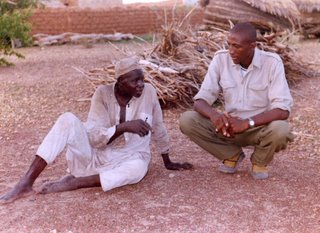
Development workers and policy makers have to work closer with the beneficiaries of their efforts, who are their clients in other to understand what the real priorities are.This could mean going to the remotest communities in Africa, Asia ,…where ever.
Politicians from around the world must also stop rhetoric, cultivate the habit of sincerity and action. While the southern nations have to shun corruption.
Good governance is particularly important for economic growth.
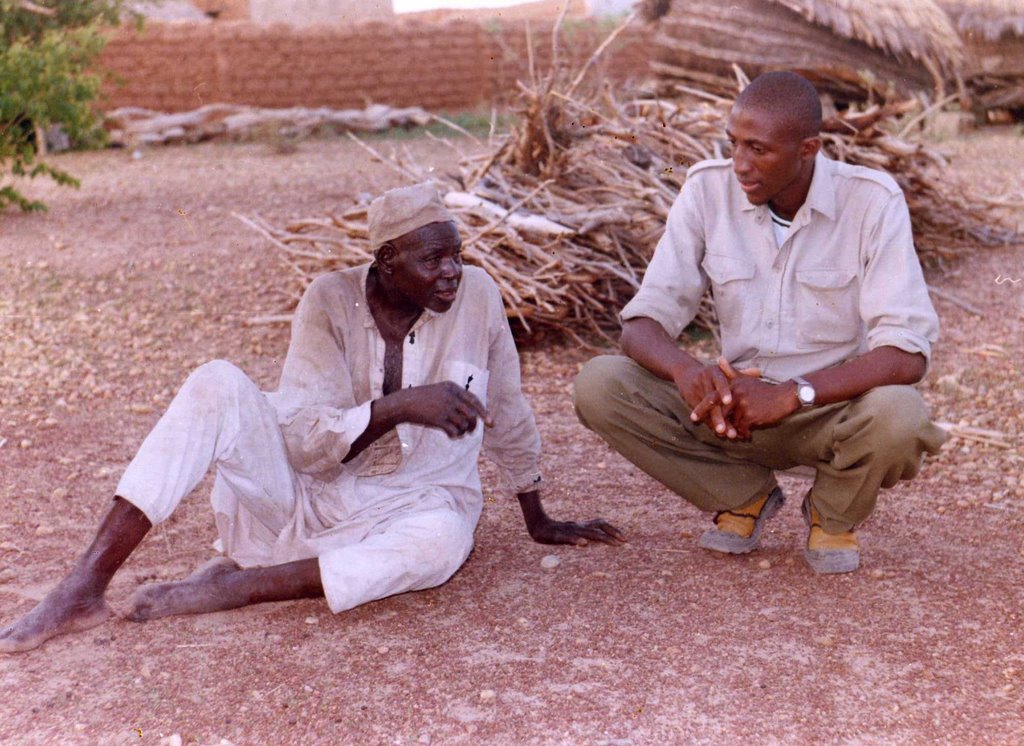
Development workers and policy makers have to work closer with the beneficiaries of their efforts, who are their clients in other to understand what the real priorities are.This could mean going to the remotest communities in Africa, Asia ,…where ever.
Subscribe to:
Posts (Atom)
